


Alternative Energy - Articles, Stories & Interviews
Connecting distributed energy resources to central control

For more than a century, electricity has flowed in one direction: from large central power plants, down transmission lines and into homes and businesses. That model is breaking down.
How UHPC Accelerated Research on Degradation Trends in LFP Cells: A Case Study with Eniko Zsoldos, PhD and Dalhousie University

Using ultra-high precision coulometry measurements and various other methods, Eniko and the team demonstrated that the commonly assumed robustness of LFP may not hold under certain operational windows.
Energy Storage Technology: A Vital Component of a Modern Power Grid

With enough energy storage on the grid, we will no longer have to size infrastructure to the highest peak. We can reduce system inefficiencies, improve utilization of assets, and lower the cost to the ratepayers.
Battery Powered Generator vs Solar Powered Generator: What is the Difference?

Learn the key differences between battery and solar powered generators, their pros and cons, and which option best fits your home or off-grid backup power needs.
Renewable Grid Integration

Ensuring grid stability with high levels of IBRs is a growing technical challenge. Traditional grids derived strength and inertia from big spinning generators, but when those are replaced by solar inverters and wind turbines, the system behaves differently.
Recent Progress in the US EV Industry: Greener and Safer EV Battery Technologies

This paper explores a range of approaches aimed at enhancing battery performance while reducing production costs and mitigating existing limitations. These approaches span from theoretical frameworks to practical advancements in anode and cathode materials.
8 Things Battery Storage Brings to Solar Systems

In this article, we'll explore eight key differences between grid-tied solar systems and home energy systems with battery storage, highlighting how solar plus battery storage offer distinct advantages.
Alternative Energy - Featured Stories
How Cyber Attackers Hack EV Charging Infrastructure
.jpg)
As the worldā€™s reliance on clean electricity becomes more commonplace, the need for stronger authentication, encryption and monitoring solutions grows.
Mon Power Brings Solar Grazing to West Virginia Site
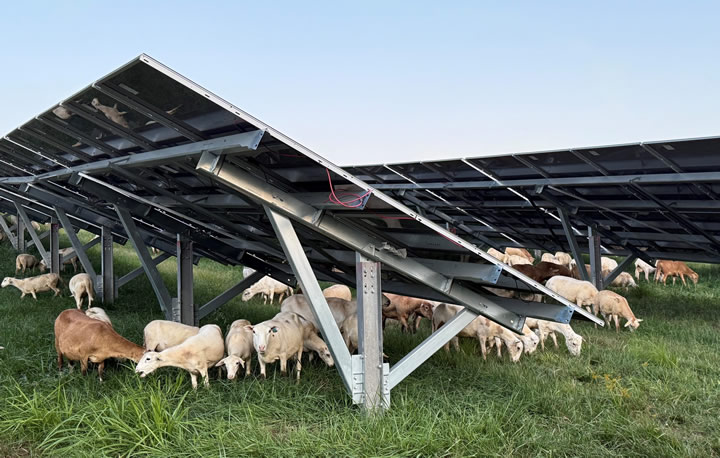
Hundreds of sheep kept vegetation trimmed at 80-acre solar facility in Monongalia County. This method of natural lawnmowing is currently being used at 506 solar sites in 30 states, according to the American Solar Grazing Association.
Building Climate-Resilient Utility Infrastructure Beyond Traditional Risk
.jpg)
The integration of climate risk into fundamental infrastructure planning and project execution processes has become a key priority for both utilities and their regulators.
Alternative Energy - News Headlines
Acoustic Imaging Provides Early Warning to Prevent Wind Turbine Gearbox Failures
As wind energy capacity grows worldwide, ensuring gearbox reliability has become essential.
New C&I ESS solution PowerKeeper Series Debuts at Sungrow Summit
-The latest commercial and industrial (C&I) solution was launched at Sungrow's European C&I ESS Summit in Como, Italy
-The series is built on Sungrow's 'Ace 007, Ace Profit' - delivering 0 waste, 0 outage and a hassle-free experience for businesses through seven key advantages.
Canadian Solar to Resume Direct Oversight of U.S. Manufacturing and Operations
The proposed adjustments constitute a related-party transaction, remain subject to the Company's board approval and CSI Solar minority shareholder approval, and may be adjusted based on forthcoming regulatory guidance and other considerations.
A New Chapter in Fire Protection: Sungrow SBH Series Passes the World's First UL Solutions' Residential Fire Test
The SBH Series: Residential ESS has achieved a significant milestone by passing the world's first UL 9540B large-scale fire test, conducted by UL Solutions. This achievement highlights Sungrow's industry-leading expertise in thermal runaway management and fire spread control, setting a new global standard for residential ESS safety.
How to Make AFCI+RSD Standard for PV Systems?
AFCI (Arc Fault Circuit Interrupter) and RSD (Rapid Shutdown Device) are indispensable for PV system safety, addressing arc fire risks and emergency shutdown needs-critical for operators and purchasers. As global PV installations grow in power and density, these technologies have shifted from "optional" to essential, especially in emerging markets like Brazil, matching local grid instability and extreme weather.
Widespread adoption requires three key efforts: 1) Policy drive-Brazil can learn from U.S. NEC 2017 standards, integrating AFCI+RSD into grid-connection rules. 2) Cost optimization-scale production and tech iteration to lower module costs, emphasizing "safety investment = long-term risk mitigation." 3) Industry collaboration-inverters makers partner with stakeholders to launch customized models (e.g., for Brazil's telecom/mining) and boost user awareness via training.
With joint efforts, AFCI+RSD will soon become universal across PV systems globally, safeguarding the industry's sustainable development.
Alternative Energy - Featured Product

Nature's Generator MyGrid 10K
A 10,000W plug & play whole-home generator with a 10kWh LiFePO4 battery for reliable backup power. Features easy setup, flexible 120V/208-240V input, and solar/wind charging. Expandable with extra batteries or solar panels, and can pair two units for 20,000W for even larger energy needs. Powers your home during power outages, reduces electricity costs, and supports sustainable energy.
Alternative Energy - Featured Company

Teledyne FLIR
Teledyne FLIR designs, develops, manufactures, markets, and distributes technologies that enhance perception and awareness. We bring innovative sensing solutions into daily life through our thermal imaging, visible-light imaging, video analytics, measurement and diagnostic, and advanced threat detection systems. Teledyne FLIR offers a diversified portfolio that serves a number of applications in government & defense, industrial, and commercial markets. Our products help first responders and military personnel protect and save lives, promote efficiency within the trades, and innovate consumer-facing technologies. Teledyne FLIR strives to strengthen public safety and well-being, increase energy and time efficiency, and contribute to healthy and intelligent communities.
